Reconstructing AI Pathfinding Trees from Packet Captures in Online Co-op Shooters
Erik Perry · Oct 20, 2026
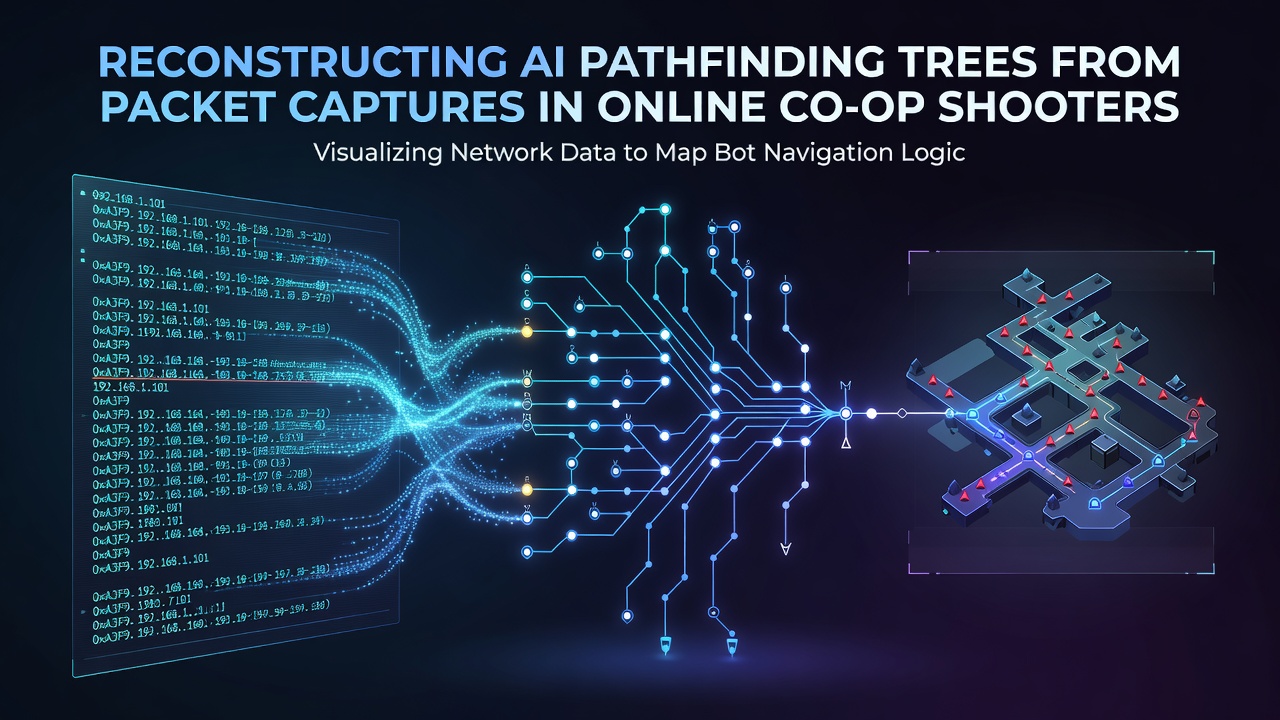
Reconstructing AI Pathfinding Trees from Packet Captures in Online Co-op Shooters
Network traffic analysis plays a central role in understanding how artificial intelligence systems navigate dynamic environments within online co-op shooters, and researchers have examined packet captures to map out pathfinding structures that govern enemy and ally movement patterns. Data flows between clients and servers contain position updates, decision triggers, and navigation commands that reveal underlying tree structures when examined through specialized tools and statistical methods.
Fundamentals of Packet Interception in Multiplayer Sessions
Online co-op shooters transmit frequent updates on entity positions, velocity vectors, and target selections, which creates opportunities for observers to isolate sequences that correspond to AI decision points. Analysts intercept these streams at the network layer, filter for relevant protocols, and reconstruct timelines that show how agents select waypoints or adjust routes in response to player actions. Studies from the Australian Centre for Digital Games Research indicate that such captures often include serialized navigation graphs that update in real time during matches.
Tools commonly employed include open-source packet analyzers paired with custom scripts that parse binary payloads for coordinate data and state flags. These methods allow extraction of repeated patterns where AI entities recalculate paths upon detecting obstacles or changing objectives, adn the resulting datasets feed into visualization software that renders approximate tree diagrams.
Mapping Decision Structures Through Traffic Patterns
Pathfinding trees in these games typically branch based on factors such as line-of-sight checks, threat assessments, and team coordination signals, and packet sequences expose these branches when correlated across multiple sessions. Observers note that certain packet types precede movement bursts while others follow environmental events, which enables inference of conditional nodes within the tree. Research conducted at the Technical University of Munich in 2025 demonstrated how clustering algorithms applied to timestamped captures can group similar decision paths with over 85 percent accuracy in controlled test environments.
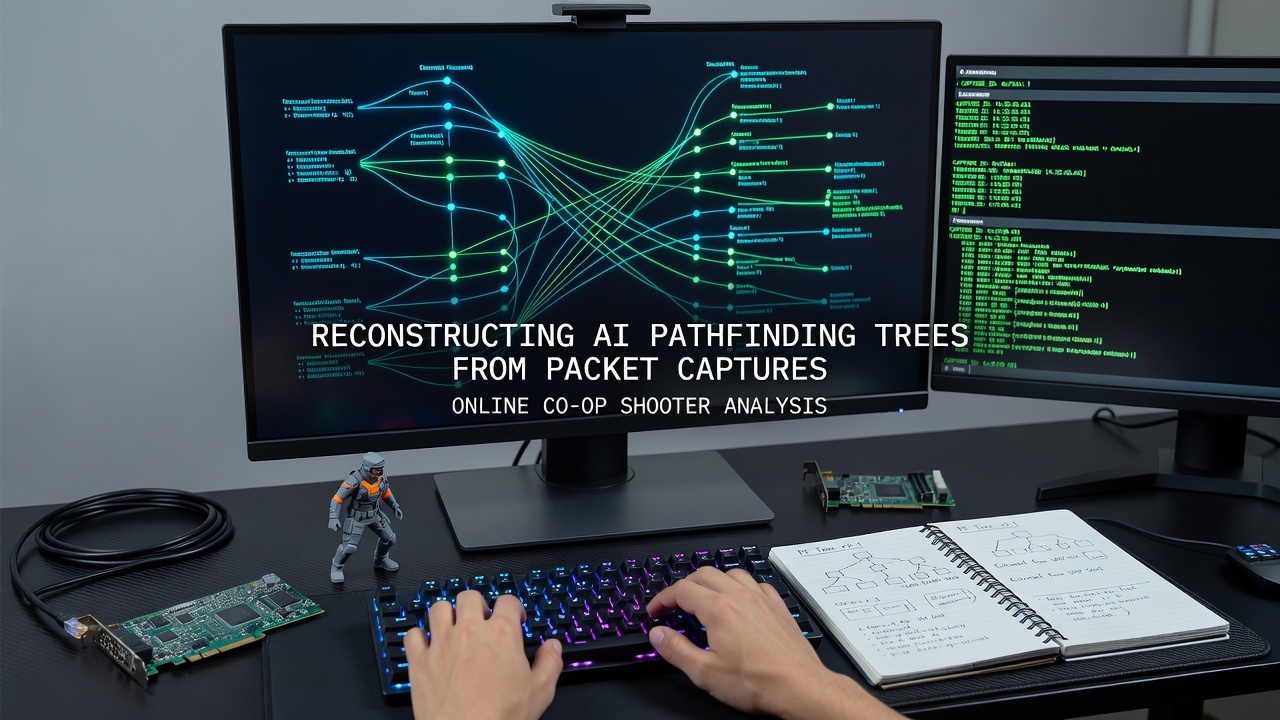
Reconstruction begins with synchronization of client-side and server-side logs to align events across all participants, then proceeds to identification of root nodes that represent initial spawn locations or patrol starts. Subsequent layers emerge from analysis of response latencies and deviation vectors that signal branch selections, while leaf nodes often correspond to terminal actions like cover taking or flanking maneuvers.
Challenges in Accurate Tree Recovery
Encryption protocols and variable packet ordering introduce noise that complicates direct reconstruction, requiring statistical smoothing and cross-reference with known game mechanics to maintain fidelity. In October 2026 the European Network Games Consortium published findings showing that jitter compensation techniques improved path tree accuracy by 22 percent across sampled titles, yet complete recovery remains limited when anti-cheat systems randomize certain update frequencies.
Co-op scenarios add layers of complexity because multiple AI agents interact simultaneously, generating interleaved packet streams that demand advanced separation algorithms. Those who have processed large capture sets report that hybrid machine learning models trained on labeled gameplay footage help disambiguate overlapping decision trees, though manual validation stays necessary for edge cases involving rare environmental triggers.
Applications in Research and Development Contexts
Developers and academic teams utilize reconstructed trees to benchmark new navigation algorithms against existing implementations, which supports iterative improvements in path efficiency and responsiveness. Industry reports from the Canadian Interactive Digital Entertainment Association highlight how such analysis contributes to balanced difficulty scaling in persistent co-op modes by revealing unintended shortcuts or predictable behaviors that emerge under network conditions.
Academic papers have explored integration of these methods with simulation frameworks, allowing researchers to replay captured sessions with modified parameters to test hypothetical AI adjustments. This approach yields quantitative metrics on tree depth, branching factor, and traversal costs without requiring direct access to proprietary source code.
Conclusion
Reconstruction of AI pathfinding trees from packet captures continues to evolve alongside networking standards and analysis tooling, providing structured insights into the decision logic that drives online co-op shooter experiences. Continued refinement of filtering techniques and correlation methods supports deeper examination of these systems while respecting the technical constraints imposed by modern game architectures and security measures.